
The First Game That Finally Made Go Liberties Click
I just finished reading Hikaru no Go, and my head was full of images of Hikaru and Sai placing stones. The urge to play Go got so strong that I jumped into games against AI befo...
I just finished reading Hikaru no Go, and my head was full of images of Hikaru and Sai placing stones. The urge to play Go got so strong that I jumped into games against AI before I even understood all the rules. The result was obvious. I got crushed.
What hurt most was this: the AI would play what looked like a casual move, and suddenly a whole chunk of my stones disappeared. Before those disasters happened, I had no idea my group was already in danger. Later I learned about liberties, but as a beginner, that logic felt too abstract to grasp.
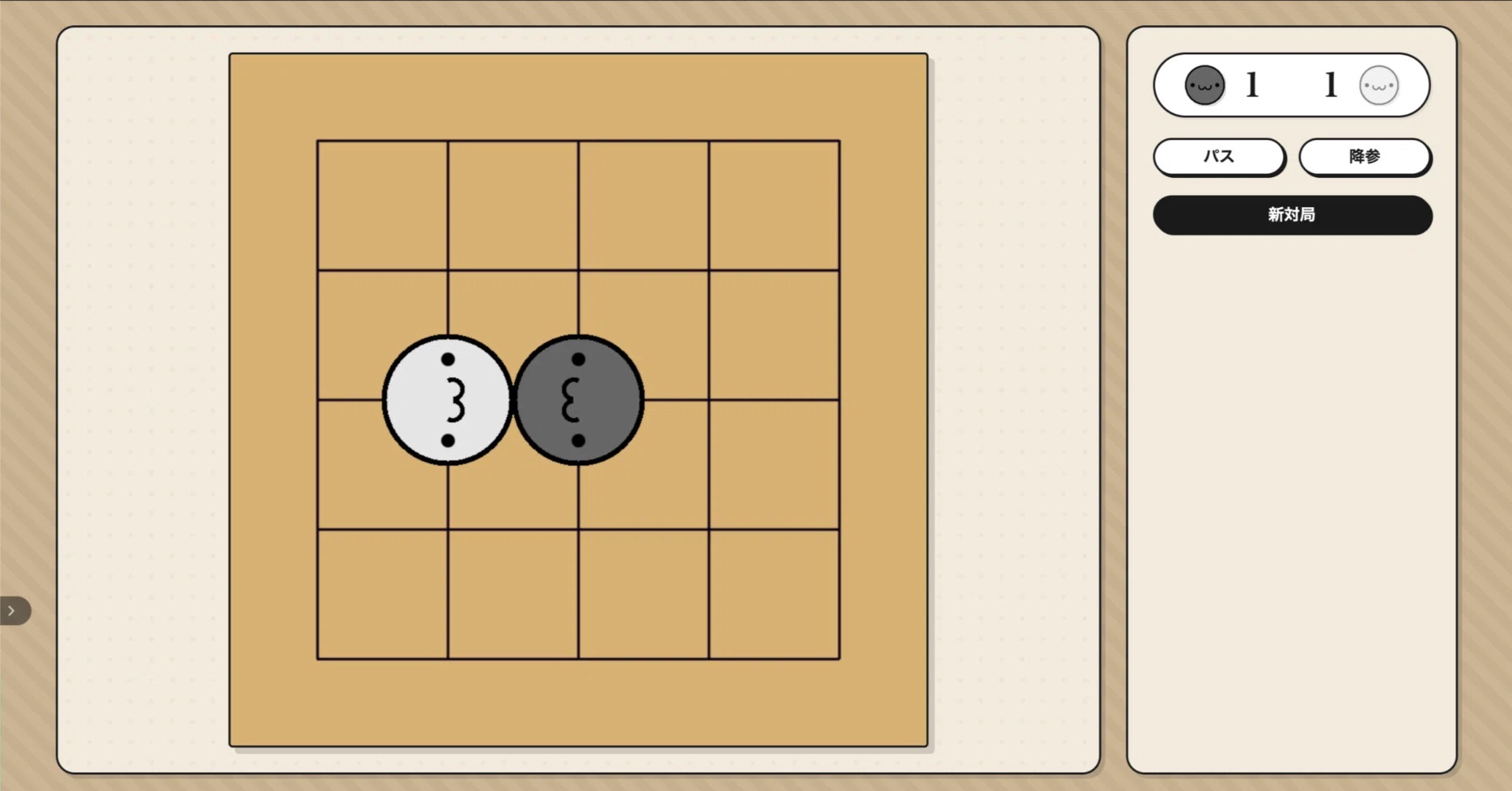
Then I found the Go mini-game PuyoGo (ぷよ碁) while browsing Bilibili. People said it fully visualizes liberties, which sounded exactly like what I needed. I tried it, and it genuinely changed how I read the board.
Liberties You Can Actually See
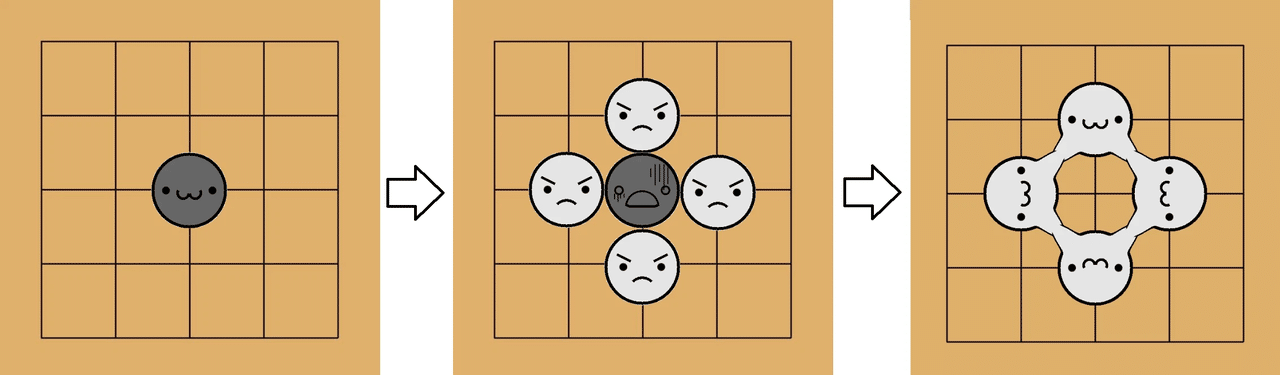
In PuyoGo (ぷよ碁), the most important but hardest concept in Go, liberties, is turned into intuitive animation.
Stones That Feel Alive
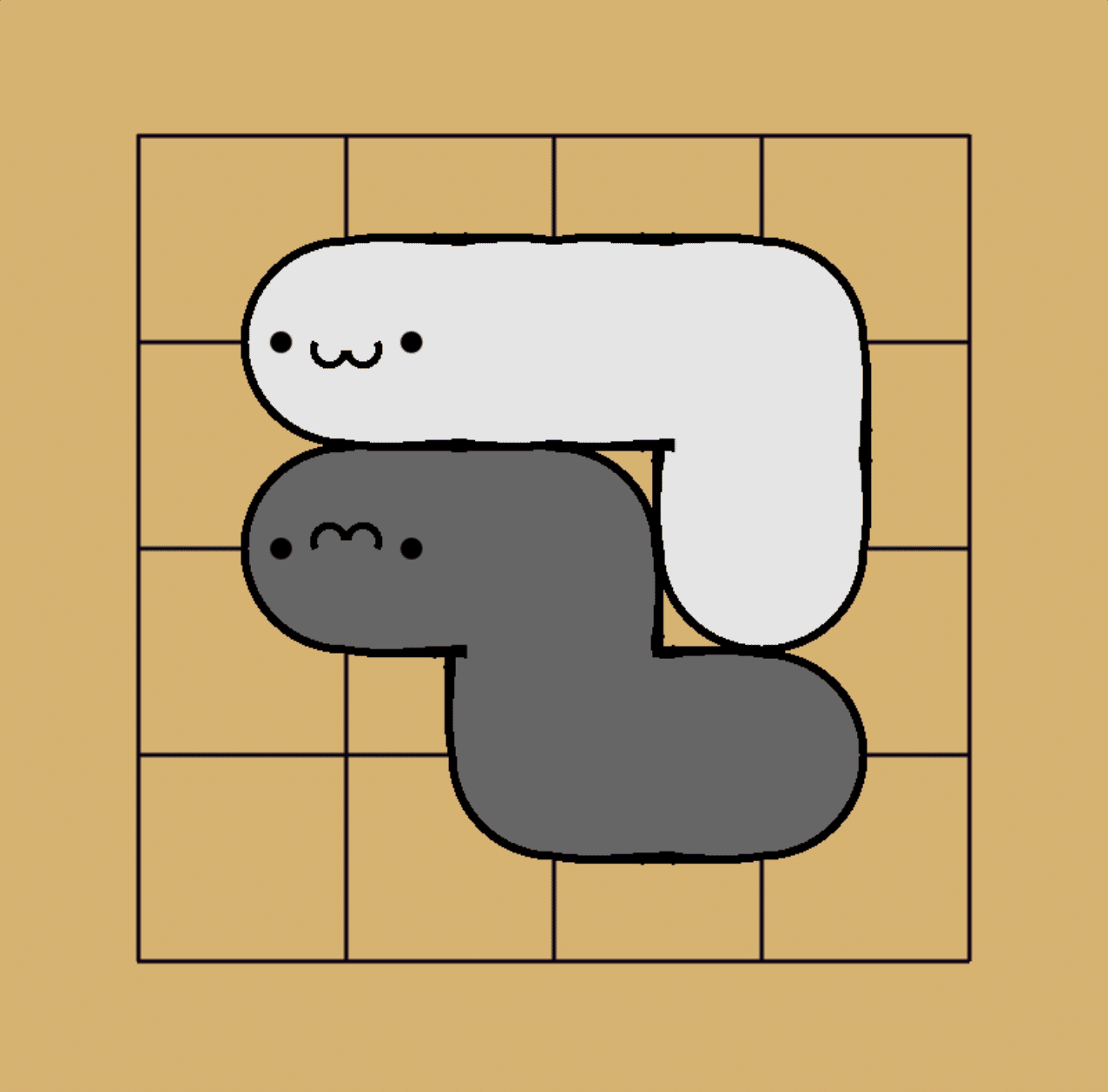
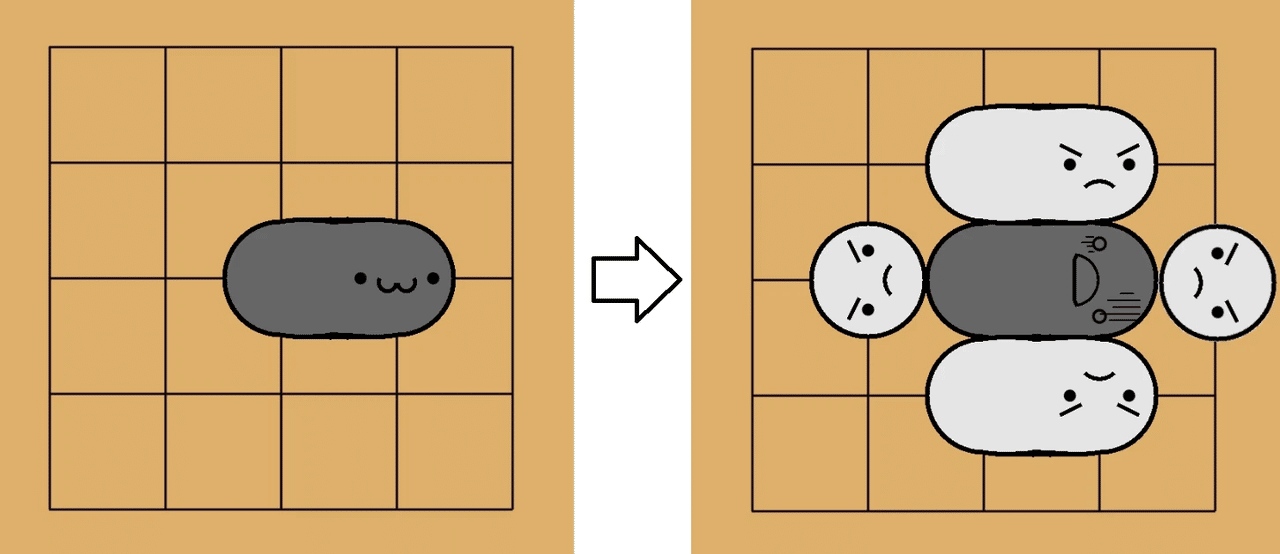
Every stone has a cute expression. Even better, stones of the same color merge together like slime when they connect. That visual "fusion" made one key idea instantly clear to me: connected stones are one group, and they share all liberties.
Facial Expressions as Position Reading
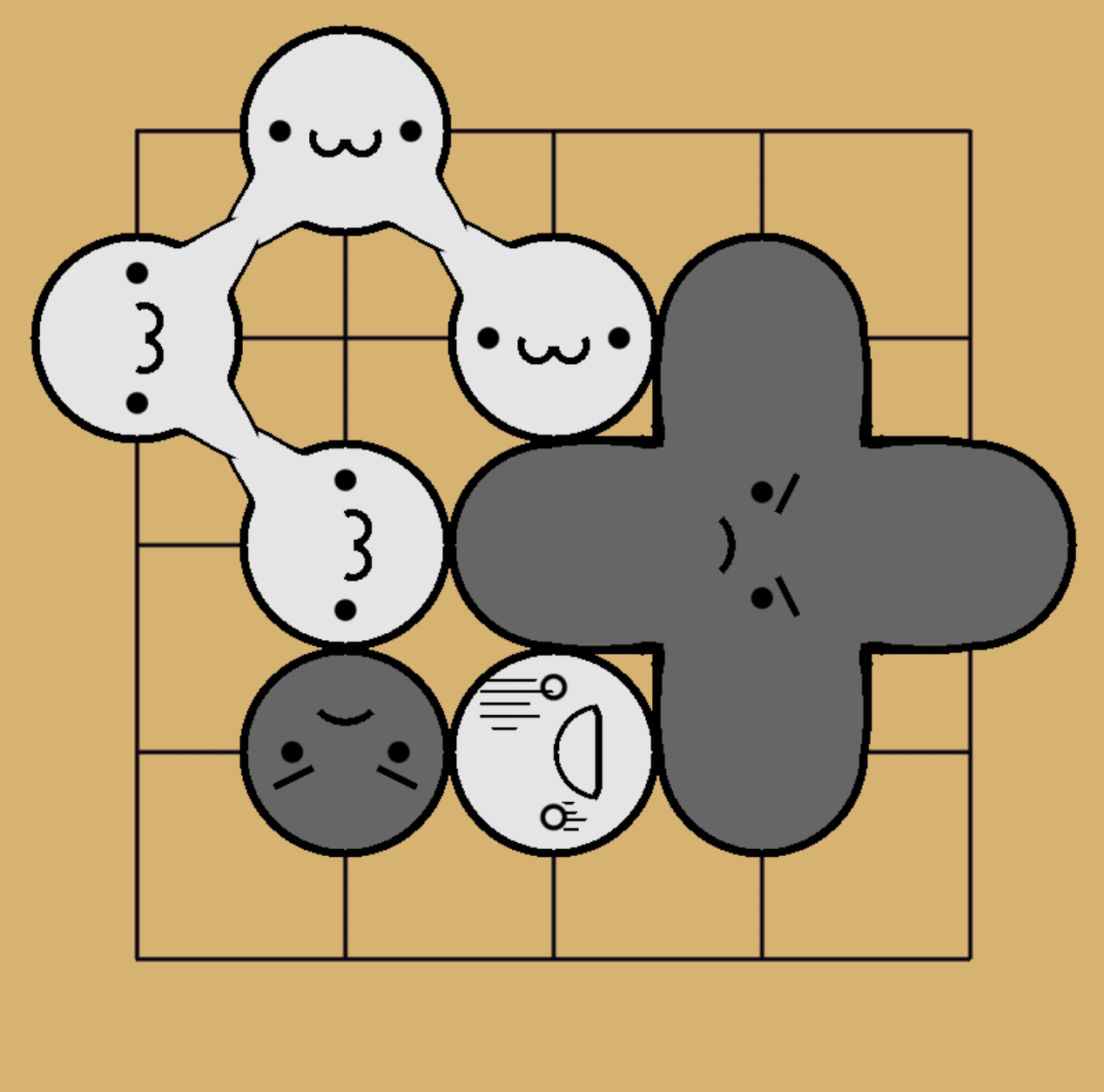
When a group has many liberties, it looks calm. As the opponent closes in and liberties shrink, the expression changes to panic. Watching stones "sweat" let me feel urgency in the position for the first time.
Connection Becomes Visible
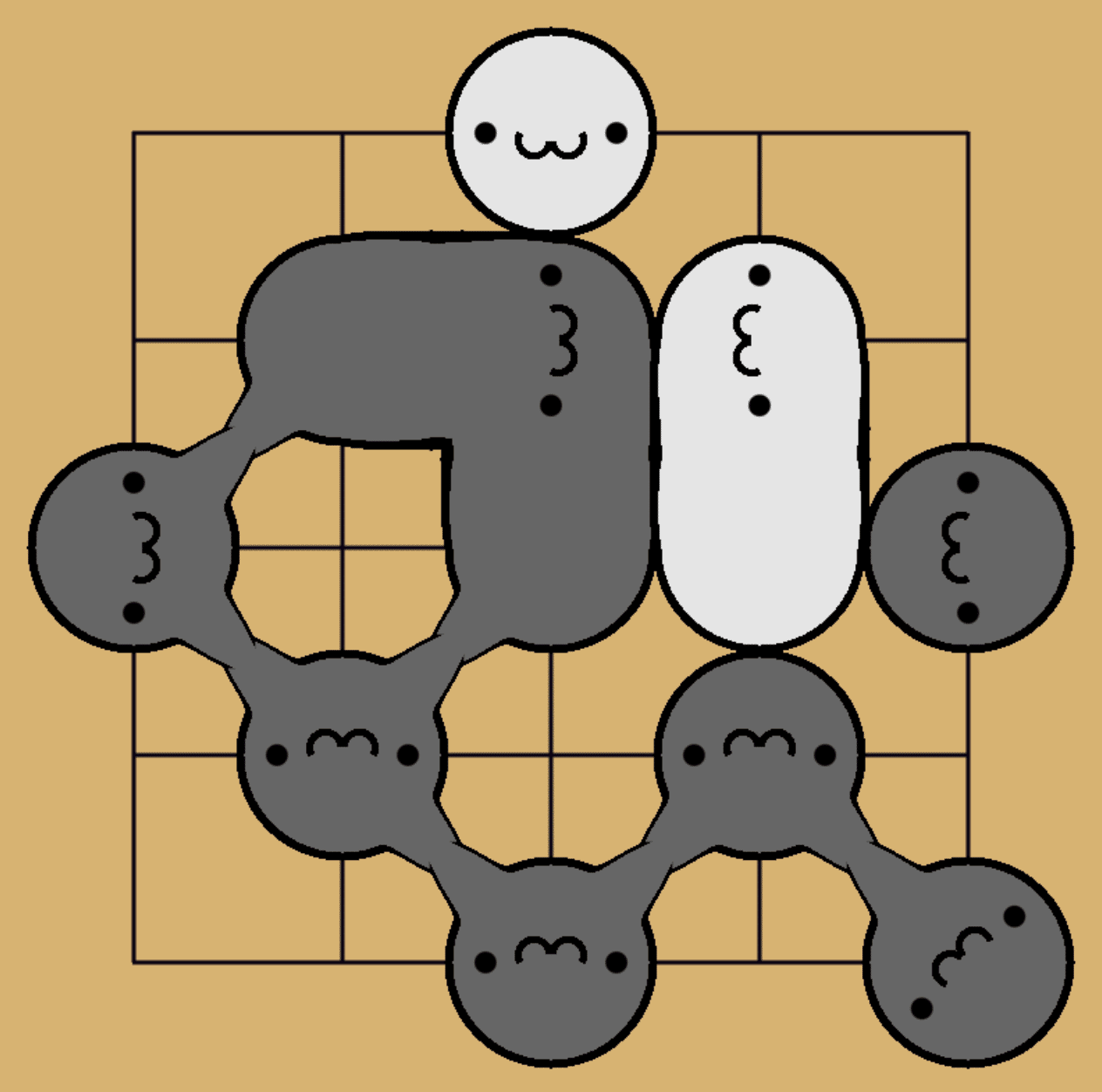
When same-color stones get close, little tentacles connect them. This makes the strength of your shape visible at a glance, so you no longer need to stare at the board and guess.
Beginner Tips That Worked for Me
After several days of playing PuyoGo (ぷよ碁), I not only figured out how to win on 5x5, but even won a game on 9x9. Here are the survival rules that helped me most.
Take the Center Early
Open near the center point (tengen). It gives the most liberties and a safer starting shape.
Keep Your Stones Connected
Try to keep your stones touching. Once your stones form a solid group, it becomes much harder for the opponent to surround and capture them.
Cut Your Opponent Often
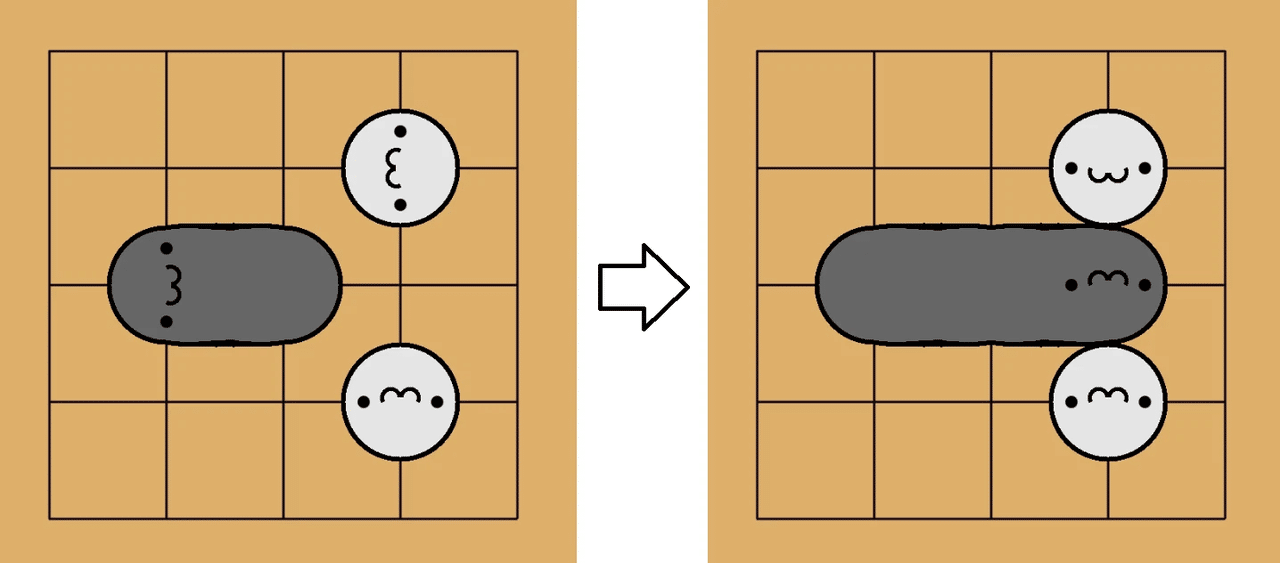
Do the opposite to your opponent. Watch their links and look for chances to cut connections. Breaking one group into several weak groups creates capture chances.
Build Two Eyes
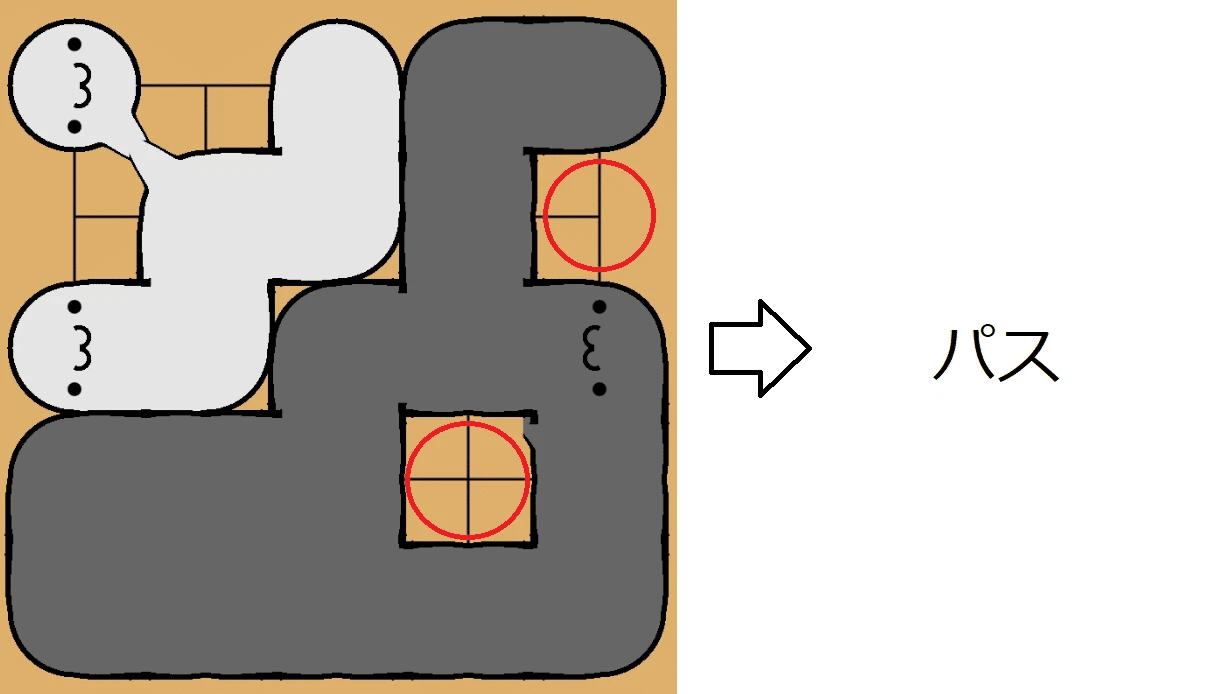
This is the key step up. If a large group secures two independent eyes, that group is alive and cannot be captured.
Final Thoughts
In the end, the best way to learn is not grinding theory but playing. I used to stare at the board and miss danger. Now one look at a panicking stone tells me I need to defend. You can start building that intuition in about ten games.
If you want to learn Go, do not get stuck in rulebooks first. Jump into a colorful board, play, and feel the game.
The real fun of Go starts after your first move.